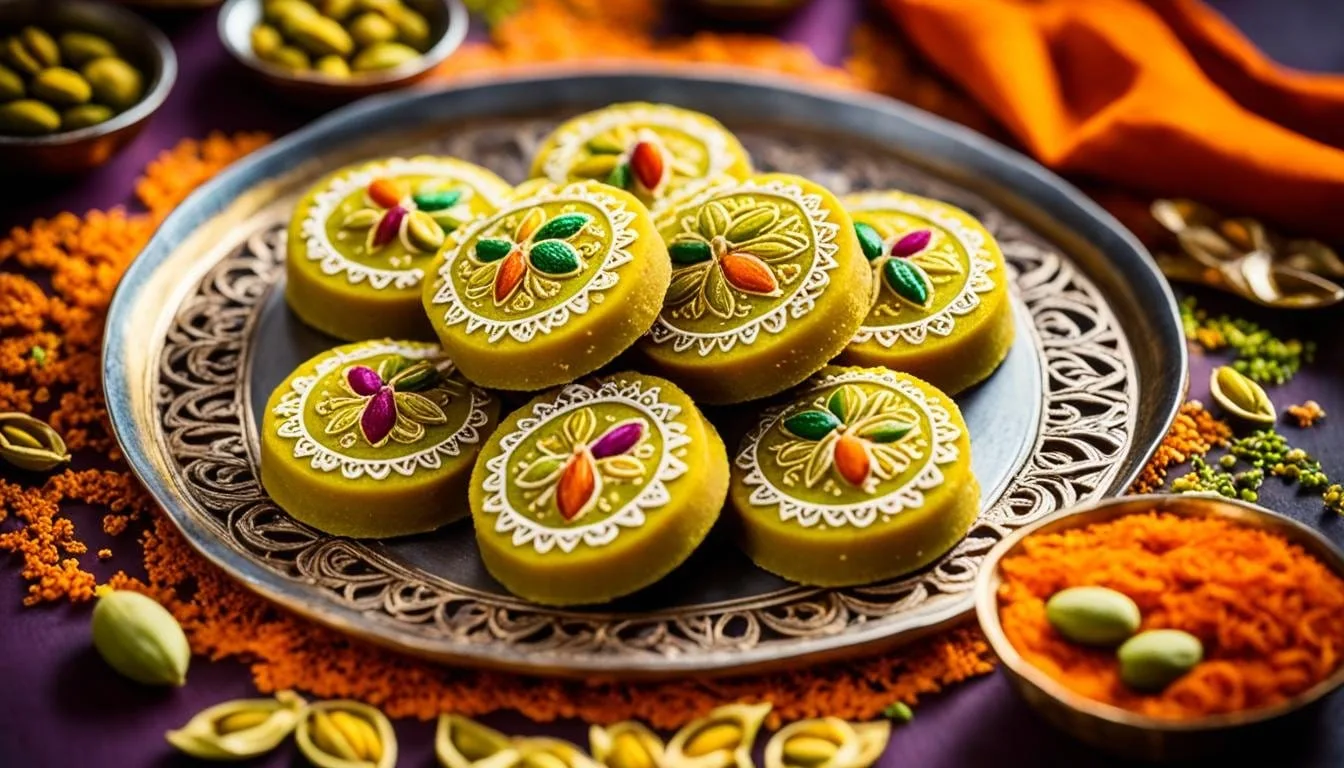
The North Indian mithai wholesale market is growing at a very fast pace because of the cultural practices and transforming needs of consumers. Most of the demand is driven by festivals and weddings and North India leads in the consumption with approximately 35 percent of the national consumption. The wholesale suppliers are a significant part of being able to fulfill this surge in an efficient and inexpensive manner.
Market Growth and Size
The Indian sweets industry, specifically in North India, has been performing very well, with the packaged sweets industry projected to rise to INR 7,268 crore in 2025 and to INR 27,647 crore in 2034 with a compound annual growth rate of 16 percent. It is dominated by North India, as the population is high in such states as Punjab, Haryana, Uttar Pradesh and Delhi NCR and the festive buying behavior with 70 percent of the annual mithai sales. This is an advantage to wholesale channels as the retailers and event planners are interested in bulk supplies to take advantage of the increasing disposable incomes and urbanization.
The development of better supply chains and cold chain logistics has allowed the wholesalers to tap into the semi-urban and rural regions more efficiently and this has increased their penetration into the market. The disorganized part of the industry continues to take up 90 percent of the industry, and this provides a chance to the wholesale partners who can be trusted to depend on quality and hygiene.
Move Toward Better Health
Wellness consumers in North India are more willing to go with mithai that contains less sugar, less fat, or some of the new twists, such as sugar-free laddoo, with the overall trends in wellness. Wholesale markets now offer alternatives with natural sweeteners or reduced-ghee formulas that do not affect traditional flavors but meet the needs of health-conscious consumers. This trend goes hand in hand with the increasing awareness of diabetes and lifestyle diseases that are very common in the area.
Packaging and Convenience Boom
Packaged and ready-to-eat mithai has changed the dynamics of wholesale and e-commerce stores have made it possible to have the goods delivered to the doorstep in the event of a birthday or an occasion. Hygienic, shelf-stable bulk packaging will be combined with OneCard to attract the attention of retailers, as nuclear families and busy people need convenience, rather than loose sweets. North Indian wholesalers take advantage of this by selling mixed boxes of classics such as gulab jamun and barfi, which are perfect to be ordered online when the festivals take place.
North Indian mithai wholesales Demand Drivers
Peak wholesale volumes are motivated by such festive seasons as Diwali, Holi and weddings, and the culture of gift-giving in North India increases the requirements in high-appearing bulk packs. The local tastes are inclined towards sweets made of milk like rasgulla, milk cake, and kalakand, and besan and dry fruit types that can be transported without problems. Sweet shops and caterers have constant demand all year round of wholesalers specializing in these staples.
Export potential is an additional dimension since North Indian mithai is demanded by the diaspora in the US, the UK and the Middle East, where people want their traditional diaspora mithai and this forces the wholesalers to standardize to increase shelf life. The Punjab and Haryana local tourism is also a boon to the souvenir packs and they are a blend of modern and traditional.
Wholesale Supply Technology
Online applications make the life of North Indian mithai wholesalers easy, including management of stocks and tracking of orders through applications. The suppliers use machine production that would be used to produce the products, such as patisa, dhoda and gajar barfi, in a consistent manner and this ensures hygiene and scalability. The integration of e-commerce makes it possible to take direct bulk orders that cut off the middlemen and provide competitive prices in the whole of Punjab, Haryana, Himachal Pradesh, and Chandigarh.
Local Delicacies and Favorites
The states of Punjab and Haryana are at the forefront in the demand of fat, ghee-based sweets such as besan barfi, coconut barfi, and shadi bhaji, which are considered to contain the melt-in-the-mouth feeling. Depending on the tastes of different consumers, wholesalers have different assortments (such as kaju barfi, til bhugga, and chocolate barfi) to attract different consumers, and because of the affordability of small quantities of these products, retailers are attracted. These large-volume transactions are strengthened by hygiene standards that are certified by authorities.
Social responsibility and Ethical Sourcing
Wholesalers focus on environmentally friendly activities, getting their dairy and nuts locally in order to reduce expenses and attract environmentally conscious consumers. Sustainable packaging minimizes waste, and this corresponds to the government efforts in food safety and via MSME. This is a positive trend enhancing wholesale attraction in competitive North Indian markets.
Future Outlook
Further premiumization of the North Indian mithai wholesale market and fusion variants, as well as personalized bulk orders, are also likely to increase. Improved logistics and online sales indicate broader access, and this is beneficial to manufacturers that do not compromise quality due to an increase in scale. The retailers must track these changes so that they can store the varieties that are trending at a profit.
Overall, being on these trends puts businesses in a position to succeed. To have a reliable supply of hygienic, machine-made Indian sweets, which are delivered in Punjab, Himachal Pradesh, Chandigarh, and Haryana, Murliwala Sweets is a good alternative.