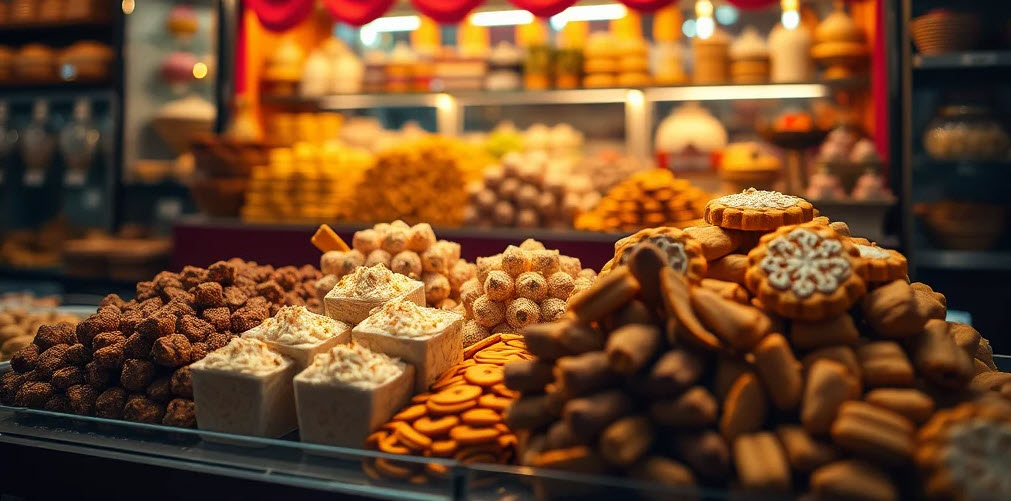
Sustainability practices are no longer a choice in the confectionery industry and more so in the case of a handfree sweets manufacturer. As consumer awareness of environmental effects and ethical production is increasing, manufacturers are required to incorporate sustainable values in all their business operations. Sustainability does not only guarantee environmental stewardship, but also economic sustainability over a prolonged time frame and social responsibility. This is especially important to such companies as Murliwala Sweets, located in Punjab, that manufactures a wide range of traditional Indian sweets maintaining the standards of hygiene and low prices.
Sourcing of Raw Ingredients in a sustainable manner
The idea of sustainability in sweets production starts with the responsible sourcing of ingredients. In the case of Indian sweet manufacturers like rasgulla, gulab jamun, and barfi variations, the purchase of raw materials like sugar, milk, nuts and flavourings will be necessary in sustainable farms. Ethical sourcing involves selecting those suppliers whose business operations are environmentally friendly i.e. responsible water consumption, organic farming, and fair labour practices. The first step allows minimizing the total ecological footprint and supporting communities in the agricultural supply chain.
With the help of traceability systems, manufacturers will be able to trace the source of their ingredients, enhancing transparency and making the farming practices more environmentally conscious. This strategy will appeal to the consumers who are becoming more concerned with sustainability in their buying behaviours.
Production of Energy and Reduction of Wastes
The production of handfree sweets is based on specialised equipments, which are used to guarantee the production is hygienic with minimal human contact. This process of industry may however be energy consuming. By adopting energy efficient equipment and streamlining of operational processes, consumption of energy is greatly reduced. Employing renewable sources of energy like solar panels where possible are also another way of reducing the carbon emission.
Waste reduction strategies should also be a priority of the manufacturers. Sweet production may produce wastes and packaging materials and when poorly disposed, may cause environmental degradation. Recycling efforts, reduction of packaging without affecting the product safety and seeking biodegradable or reusable alternatives show a high level of commitment towards sustainability. Moreover, the production cycle can be closed in a sustainable manner by recycling organic waste and using it as animal feed or compost.
Water Preservation and Sustainable Use
The water consumption in the confectionery production is essential, particularly in the production of sweets such as milk cake, kalakand and laddu that consumes a lot of dairy and cleaning. Conservation of water by using efficient equipment, recycling system and observation of the amount of water used will reduce wastes.
Producers should make sure that wastewater should be disposed in the appropriate way to avoid any contamination of the surrounding water bodies. This is done by embracing water saving technologies and training workforce on responsible practices in water usage, which increases sustainability and minimizes operating costs.
Hygiene and Safety with Sustainability
The manufacturers of sweets also need to adhere to the highest standards of hygiene especially where hand free sweets are created whereby the least amount of human interaction would be paramount in ensuring quality. To achieve sustainability and hygiene, it is important to use cleaning agents that are non-toxic and environmentally friendly and at the same time do not interfere with the cleanliness.
It should use innovative cleaning technologies that minimize the use of chemicals and the use of water. Besides, hygiene can be achieved through sustainable packaging practices that utilize materials that help to preserve the freshness and materials that are environmentally friendly. This compromise on environmental safety and sustainability is aligned with the current consumer demands and regulation standards.
Sustainable Packaging Solutions
Packaging is a critical way of product life cycle contact having high impact on the environment. In the case of sweets, packaging should safeguard the sensitive nature of such products such as besan barfi, coconut barfi and kalakand against damage and contamination. Non-recyclable or excessive packaging is however a significant cause of waste.
Selection of sustainable solutions in packaging like recyclable, compostable or biodegradable materials can reduce the burden in landfills. The absence of the use of single-use plastics, minimized packaging layers, and use of environmentally friendly inks and adhesives also portray a brand that is environmentally conscious. Considerable packaging also boosts the brand image by cueing conscientious production to eco-friendly consumers.
Carbon Footprint Reduction in Distribution
In the case of a manufacturer supplying sweets in Punjab, Himachal India, Chandigarh, and Haryana, logistics are one of the major contributors to the environmental impact. The goals of the companies should be to lower the carbon footprint of transportation, optimising the routes of delivery, employing fuel-efficient transport, or switching to electric or hybrid transportation where feasible.
Forming alliance with local distributors and consolidation of shipments to prevent less than full lots can make the supply chain smoother. Sustainability is also ensured by efficient cold storage systems which require low energy. Such practices are not only able to cut the emissions but can also create savings in costs and which is helpful not only to the environment but also to the business.
Advancement of Culture of Sustainability
The introduction of sustainability into the corporate culture is significant as the practical measures. This begins by involving the employees in training activities to create awareness regarding sustainable practices in daily activities. The promotion of the mentality of a never-ending improvement assists in finding the additional opportunities of environmental gains.
Education is not limited to manufacturing, but also to marketing and interaction with the customer. Openness on sustainability targets and performance creates credibility with the consumers and makes them declare in support of responsible brands. An example of such as Murliwala Sweets may emphasize its adherence to sustainability as a part of the innovative strategy, relating the tradition to the modern values.
Sustainable Growth through Technology and Innovation
The issue of innovation is significant in the development of sustainability of a handfree sweets manufacturer. Environmental performance could be enhanced greatly by using technology to enhance energy management, waste monitoring and resource use.
Automation, when introduced, does not only enhance production efficiency, but reduces the use of resources and waste. IoT devices and intelligent sensors may help to optimise the work of the machinery and trace the efficiency of the processes in real time. Also, the shift towards green confectionery can be facilitated by investing in research in order to create new, eco-friendly ingredients and production methodologies.
Conclusion
Modern sweets manufacturing is viewed as a part and parcel of sustainability, particularly to businesses that believe in quality, affordability and environmentally-sustained businesses. Implementing sustainable sourcing, energy use, waste management, water conservation and new packages, manufacturers will be able to minimize their ecological imprint and guarantee the long-term sustainability.
Based in Punjab and neighbourhood areas, Murliwala Sweets is a good example of how innovation or traditions can be used to combine, and produce delicious Indian sweets including gulab jamun, kalakand, and barfi varieties and sustainability. The demand of customers to use ethical and environmentally friendly products is growing, so the introduction of sustainability in everyday activities is the answer to remaining a relevant and a responsible player in the competitive environment.