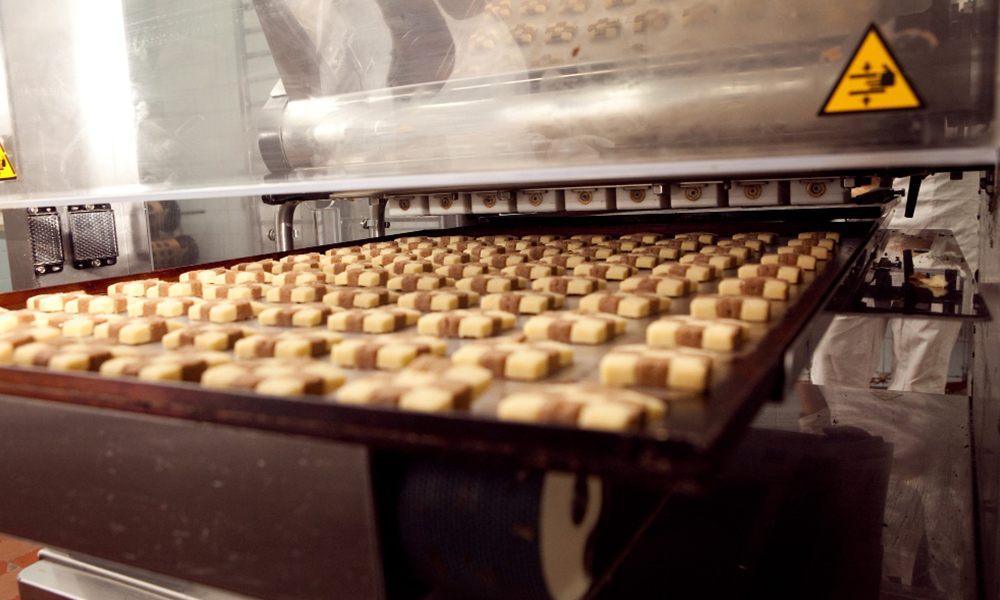
The culinary sector in Punjab is something that is strongly rooted in the culture of the Indian sweet snacks. As the flavours and the recipes have been efficiently maintained over various generations, the manner of production has drastically changed due to the use of modern technology. One of the first examples of such evolution is the specialized machine sweets manufacturer who mixes craftsmanship and innovation to produce sweets of high quality on a consistent and hygienic basis. This article discusses how technological developments have been transforming the sweets manufacturing sector in such a way that it allows the brands such as Murliwala Sweets to supply increasing numbers of customers with its products without losing their authenticity or quality.
Technology in Sweet Manufacturing in the Modern World
Traditionally the process of creating Indian sweets were very manual; manual mixing, cooking, and shaping each and every confection. Although this process guaranteed artisanal quality, it was also a challenge when reaching such large-scale production demands, on that of scale, esthetic consistency, and hygiene. Come the age of specialised machinery used only in the manufacture of Indian sweets.
Automation has the capability of imitating the old processes meticulously. Automaticicture mixers, temperature managed cooking vessels and mechanised shaping sections are deployed so that every set of sweets passes high quality guidelines. Not only does such equipment make the production process more efficient, but it also ensures that human contact is reduced largely, which contributes to good hygiene, which is critical in food production nowadays.
Machine Advances Suited to Various Indian Sweets
Indian desserts include syrupy sweetness of Rasgulla and Gulab Jamun and dense sweets made of Barfi and Laddu and each needs a specific method of manufacturing. The issue is that machines are needed to adjust to these different textures and cooking needs without sacrificing the flavor or the appearance.
This challenge has been met by the recent technological inventions promoting the creation of multi-purpose machinery. An example is referencing the automated syrup heating and infusion mechanism, which makes the syrup based sweets to be well soaked with uniform sweetness such as Rasgulla. Equally, mechanical moulding machines manufacture perfectly uniform and round shaped Gulab Jamuns very quickly cutting down negativeness of production that is taken over by people.
In sweets like those of Barfi variants -Besan Barfi, coconut Barfi and Kaju Barfi, which are sugar-rich in content, specialised cooling, and cutting machines are implemented. Such machines control this process of cooling, slicing uniform pieces of sweets maintaining the shape, and avoiding crumbling.
Automation to Control Hygiene Level
In food production hygiene is everything. The hygienic cleaning of the sweet industry has been revolutionised by the specialized machine sweets manufacturer approach. High-tech stainless-steel equipments and automated lines reduce the amount of manual operations that would require contamination.
To ensure that production lines are subject to high sanitary standards required in the contemporary procedures over food safety, automated cleaning systems built into machines play a significant role. Additionally, machines are used under controlled environments that minimise microorganisms/contaminants in the air to a large extent and mechanised packaging units seal sweets in sterile environments without any external contact.
A special emphasis on hygiene is more relevant concerning sweets that will be supplied to a large area across Punjab, Himachal Pradesh, Chandigarh, and Haryana as assurances on quality are central to customer loyalty.
Increasing Efficiency and Maintenance in Production
One of the critical benefits of the decision of implementing specialised machinery is consistency in production. They are coded to act on predetermined parameters on such aspects like temperature, time and mixing speeds- factors crucial to the texture and taste of the end product. Scientific accuracy of this kind guarantees that sweets such as Milk Cake and Dhoda manufactured now and tomorrow will possess the same popular taste and structure.
Efficiencies are also quite significant. Using machines would enable them to make much more sweets than by manual labor, enabling the sweets to be sold in bulk prices without compromising quality. The scalability helps meet the rising consumer demand during valentine weekends, weddings and other festivals and makes authentic Indian sweets more approachable.
Use of Technology in Distribution and Packaging
New inventions have gone beyond the production lines into the packaging technology. Sweets are sensitive and in many cases have a short shelf life, and require a packaging that has to safeguard freshness, and should also be cost effective. Automated packaging equipment is used to measure, portion and package sweets under controlled environments so that they are hydrated and do not go bad.
It also improves through technology the process of managing the supply chain. There are digital tracking systems to make sure that sweet consignments get to retailers and customers in time and in the best condition. The demand can be satisfied efficiently by the manufacturer as he/she has a robust distribution network facilitated by real time inventory management, which enables it to meet demand in various states.
The Future of Sweet Manufacturing: Smart sustainable
Further on, more disruptive innovations are on the rise in the industry. Smart manufacturing combines the Internet of Things (IoT) sensor and data analytics with machine learning. Said technologies observe the parameters of production in a real-time mode, anticipating a maintenance, and perfecting the supply of resources, which inevitably results in a decrease in downtimes and minimisation of wastes.
Indeed, the trend of environmental friendliness is also finding application in the manufacture of sweet. Due to the reduction of carbon footprints by energy-efficient machines and the minimization of environmental impact presented by sustainable packaging materials, environmentally conscientious consumers will be satisfied as well. These developments go hand in hand with more aware consumer taste without distortion of the much-loved traditional taste profile.
Conclusion: Murliwala Sweets The innovation of the leaders
There is a technological rebirth in the confectionery industry in the Punjab, which balances between the past and the present. With the application of dedicated machinery, companies such as Murliwala Sweets have not only made sure the original flavours of popular Indian sweets are kept but also increased hygiene, efficiency, and scale of production. Such innovation and cultural heritage combination guarantees that customers in Punjab, Himachal Pradesh, Chandigarh, and Haryana can always take the best of the sweets at low prices.
As a visionary specialized machine sweets manufacturer, Murliwala Sweets exemplifies how technology can sustain and elevate an age-old craft, forging a future where every sweet bite tells a story of excellence powered by innovation.